
You have the qualifications. You have the framework. You have people who genuinely need what you do.
And yet you’ve quoted the same fee for three years, answered a client at 11 pm on a Sunday, and rewritten your sales page eleven times without publishing it.
Nothing is wrong with your business plan. The problem sits one layer beneath it: the nervous system that has to execute the plan.
TL;DR
Trauma-informed business coaching helps helping professionals spot when old protective patterns drive their pricing, boundaries and visibility.
If you know what to do and still don’t do it, the gap is regulation, not information.
It is coaching, not therapy, and a good coach refers on when the work belongs elsewhere.
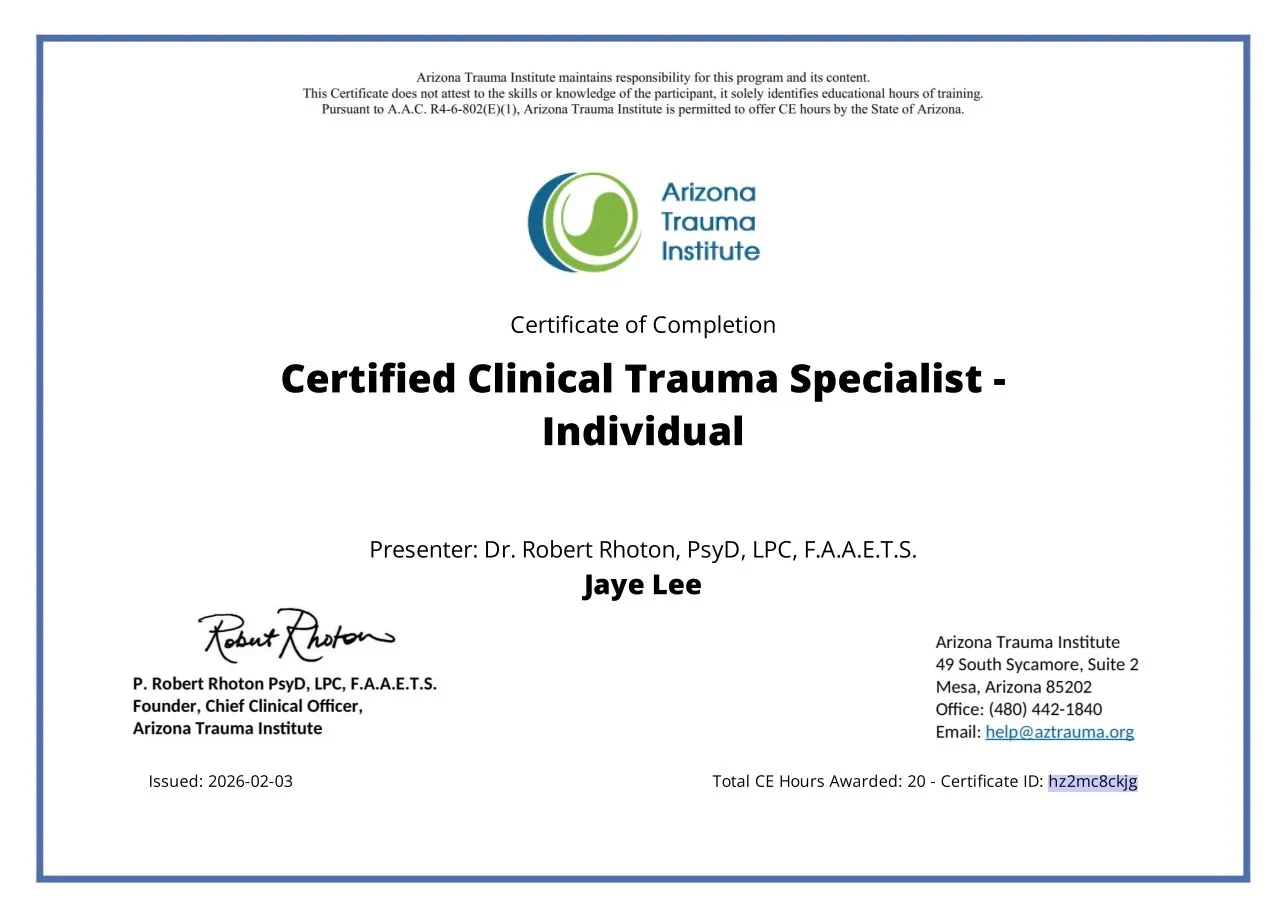
I’m a co-founder of Oneness Consultancy & Academy, an ICF MCC-credentialed coach and business strategist, and, since February 2026, a Certified Clinical Trauma Specialist – Individual (CCTS-I). This article explains why I believe trauma-informed business coaching is the missing layer for helping professionals, and, just as importantly, where its limits are.
My version of the short answer
Trauma-informed business coaching is a coaching approach that recognises how past adverse experiences and chronic stress shape present-day business behaviour, such as pricing, boundaries, visibility and decision-making, and builds safety, pacing and choice into the work instead of relying on willpower.
It is not therapy. It does not diagnose or treat trauma. It helps business owners notice when an old protective pattern is running their commercial decisions, and build strategy that works with their nervous system rather than against it.
Why strategy alone stalls
Most business coaching assumes a simple chain: get clarity, make a plan, take action. That chain works beautifully for people whose nervous systems file “send an invoice” under routine admin.
For many helping professionals, it gets filed under danger.
Under perceived threat, the human stress response narrows our thinking and pushes us toward one of four defaults: fight, flight, freeze or fawn. The fourth, fawning (appeasing, pleasing, smoothing things over to stay safe), is the default that helping professionals wear so well that it gets mistaken for a personality trait, or worse, a professional virtue.
In business, threat doesn’t look like a bear. It looks like:
- A client’s disappointed email
- Raising your fees
- Saying “no” to a discounted request from someone who “really needs this”
- Hitting publish on a bold opinion
- A prospect going quiet after your proposal
Your intellect knows none of these is dangerous. Your body didn’t get the memo.
This is why so many capable practitioners can explain the correct pricing strategy, boundary policy and marketing plan, and still not implement any of them. It isn’t a knowledge gap. It’s an implementation gap, and the bridge across it is regulation, not more information.
The six patterns I see most often
When I work with coaches, therapists, consultants and other helping-profession founders, the same patterns keep surfacing. They rarely announce themselves as “trauma responses.” They arrive dressed as business problems.
| Pattern | How it shows up | What the old script says | The trauma-informed shift |
| Undercharging | Fees stay low for years; discounts appear unprompted | “Wanting more money makes me greedy or selfish” | Separate worth from price; test fee increases in small, safe steps |
| Over-delivering | Free extras, unlimited messaging, sessions running over | “Being valuable means giving more than is asked” | Define scope in advance; treat boundaries as a service standard |
| Boundary collapse | Letting clients renegotiate terms mid-engagement | “Conflict means I’ve failed” | Script the boundary conversation and rehearse it before you need it |
| Invisibility | Great work, minimal marketing, no clear offer | “Being seen is unsafe” | Build visibility in graduated exposure, from private to public |
| Launch paralysis | Endless tweaking, delayed publishing | “If it isn’t perfect, I’ll be punished” | Set a “good enough” standard and a publish-by date |
| Over-responsibility | Taking the blame for client outcomes or chaos | “If something goes wrong, it’s on me” | Clarify what is yours, what is theirs, and what belongs to the situation |
Notice that none of these is fixed by a better funnel. Each one needs a strategy and a way of making that strategy feel survivable.
Strategy vs regulation: what’s the actual difference?
Here’s a distinction I use with clients constantly.
Strategy answers: “What should I do?”
Regulation answers: “Can I stay steady enough to do it?”
A pricing strategy tells you your premium offer should cost X. Regulation is what lets you say “X” out loud on a sales call without your voice shrinking, without immediately adding “but we can talk about it”.
Traditional coaching is heavily weighted toward the first question. It’s necessary, and it’s not sufficient. When the second question goes unanswered, people don’t fail because they’re lazy or unmotivated. They fail because their system is protecting them from something it believes is real.
Or, to put it more bluntly: you cannot out-plan a survival response.
Coach, therapist, trauma specialist: where the lines are
This is the part of the conversation that too many people skip, so let’s not.
A coach works with clients who are functioning well and want to move forward: clarifying goals, building strategy, creating accountability, developing skills and confidence. Coaching is forward-looking and action-oriented.
A therapist is a licensed mental health professional who assesses, diagnoses and treats mental health conditions, including trauma-related ones, often by working with the past in depth.
A trauma-informed coach stays in the coaching lane but brings a working understanding of how trauma and chronic stress affect behaviour, so they can:
- Recognise when a pattern may be rooted in something deeper than a skills gap
- Pace the work so it doesn’t overwhelm the client
- Avoid retraumatising language or pressure tactics
- Know when a client needs therapeutic support and refer them on, without hesitation
That last point is the ethical backbone of the whole approach. Trauma training doesn’t make a coach a therapist. It makes a coach better at knowing where their work ends. If someone brings material that belongs in a therapy room, the right response is a warm, well-timed referral, not a DIY excavation.
Why I earned the CCTS-I, and why I waited to talk about it
I’ve said publicly that I’m not in the business of collecting credentials. Letters after a name don’t build a practice, and they don’t make anyone a better human.
So why this one?
Because the questions my clients kept bringing me were increasingly about why they couldn’t do what they already knew how to do. Business strategy was rarely the missing piece. I wanted a deeper, evidence-informed understanding of how stress and trauma shape behaviour, so I could serve those clients responsibly rather than improvising.
I earned the Certified Clinical Trauma Specialist – Individual (CCTS-I) designation in February 2026. I deliberately waited a few months before announcing it. I wanted to see how it changed my practice before I turned it into content.
Here’s what shifted for me:
Something I stopped doing: I stopped treating a client’s missed deadline as a discipline problem. Now I first ask what was happening in the days before it. Sometimes it’s a prioritisation issue. Sometimes it’s a fear of being visible.
Boundary work: I now script boundary conversations with clients in advance and practise them in session, rather than telling people to ‘just say no’.
Pacing: I no longer stack big asks (new pricing, new offer, public launch) in the same month. Sequencing matters more than ambition.
Language: I dropped phrases like ‘push through it’ and ‘just be bolder.’ Pressure is not a strategy for people whose systems already run on pressure.
Self-application: I redesigned my own client capacity and response times. If I’m teaching sustainable practice, mine should be one.
What a trauma-informed coaching session actually looks like
People imagine trauma-informed coaching as soft, slow and endlessly reflective. It isn’t. It’s structured, commercial and outcome-focused. It just respects the human doing the work.
Here’s the loop I use, simplified into four steps:
1. Spot the signal.
Notice the body’s early warning: a tight throat, a held breath, a sudden urge to over-explain or apologise. The body flags the pattern before the mind catches up.
2. Separate fact from script.
Ask: What is objectively true here (contract, data, the client’s actual words), and what is my old story adding? Write both columns down.
3. Stabilise before you decide.
Pause. Breathe. Sleep on it. Delay the reply by 24 hours. Decisions made from a regulated state are consistently better than decisions made in the heat of a threat response.
4. Step forward, small and specific.
Pick the smallest business-relevant action that moves you toward your goal: send the proposal at the new fee, state the boundary in one sentence, publish the post at 90% ready.
Repeat. Confidence isn’t a personality upgrade. It’s what accumulates when your system learns, through repeated experience, that the feared thing didn’t destroy you.
Seven self-check questions for helping professionals
Ask yourself honestly:
- Have I kept my fees below what my results justify because charging more feels uncomfortable?
- Do I regularly give unpaid time or extras I later resent?
- Do I feel responsible for how my clients feel about the outcome, even when I’ve delivered what was agreed?
- Do I avoid promoting my work even though I believe in it?
- Do I over-prepare, over-explain or over-apologise in client conversations?
- Does a client’s dissatisfaction produce a physical reaction (tight chest, racing heart, dread) that seems out of proportion to the business facts?
- Have I known what to do for months, without doing it?
If several of this land, it doesn’t mean something is “wrong” with you. It usually means you’ve built a business on a foundation of competence and protection, and the protection is starting to cost more than it saves.
What this means for your business model
A trauma-informed lens changes commercial design, not just mindset. Practically, it can mean:
- Pricing built on value and sustainability, not on what feels emotionally safe to ask
- Clear scope and terms so you don’t have to renegotiate boundaries in real time
- Capacity limits that protect you from the over-delivery-to-burnout cycle
- A visibility plan with gradual steps, so marketing feels achievable rather than exposing
- Referral pathways to therapists and other professionals, written into your practice from day one
Sustainable practices are rarely the loudest or the biggest. They’re the ones whose owners can keep showing up for years without emptying themselves out.
Frequently asked questions
What is trauma-informed business coaching?
It’s a coaching approach that accounts for how adverse experiences and chronic stress shape behaviour, including pricing, boundaries and decision-making, and builds safety, pacing and choice into the coaching process. It is not therapy and does not diagnose or treat.
Is trauma-informed coaching the same as therapy?
No. Therapy is delivered by licensed mental health professionals who assess and treat mental health conditions. Trauma-informed coaching is forward-focused, and a responsible coach refers clients to a therapist when their needs go beyond coaching.
Who is trauma-informed business coaching for?
It’s particularly relevant for helping professionals (coaches, therapists, consultants, educators, healthcare and social-impact founders) who are skilled at caring for others but find it hard to price, set boundaries or promote their own work.
Can past experiences really affect how I price my services?
Yes. Early experiences can shape beliefs about worth, money, conflict and being visible, and those beliefs often operate quietly in business decisions. Recognising them doesn’t erase them, but it lets you make choices deliberately instead of reactively.
How do I know if my business struggles are strategy problems or nervous-system patterns?
A useful test: if you already know what to do, have the skills to do it, and still don’t, the block is probably not informational. Persistent gaps between knowing and doing, especially with strong emotional or physical reactions, suggest a protective pattern is involved.
What is the CCTS-I certification?
Certified Clinical Trauma Specialist – Individual is a professional certification in trauma-informed practice. It informs how practitioners understand and respond to trauma, but it does not turn a coach into a licensed therapist.
How long does it take to see change?
It varies widely. Some people shift a specific behaviour, like a fee increase or a boundary conversation, within weeks. Deeper patterns take longer. Anyone who promises a fixed timeline is guessing.
The bottom line
Business skills matter. So does regulation. The most capable helping professionals I know aren’t struggling because they lack intelligence or strategy. They’re struggling because their hardest commercial moments trigger old protection systems, and no one has taught them how to work with that.
Trauma-informed business coaching doesn’t replace strategy. It makes strategy usable.
Ready to build a practice that’s profitable and sustainable? Book a discovery call or join the Oneness community (subscribe below).