
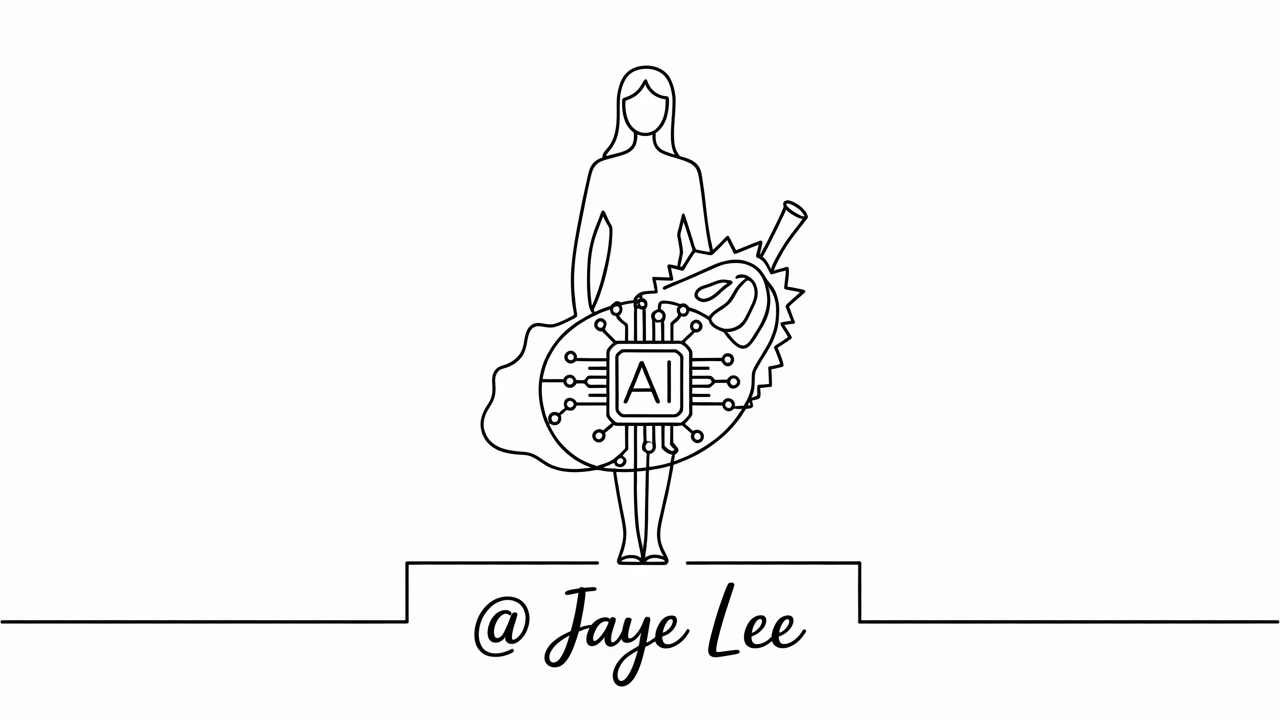
AI & Coaching: Why Your Presence Just Got an Upgrade (And No, You Won't Be Replaced by a Chatbot Who Can't Handle Durian)
The Day My Coaching Existential Crisis Met My Professional Dignity
You’re deep in a coaching session, guiding your client through a profound breakthrough about their work-life balance, when suddenly your phone buzzes with this headline: “DBS Bank Partners with Marshall Goldsmith to Launch iCoach AI App.”
Cue record scratch. Freeze frame. You’re staring at your phone like it just told you your favourite metaphor has been cancelled.
Your immediate thought: “Well, that’s it. I’m obsolete. Time to go sell essential oils and pretend I was never a real coach.”
Your second thought (slightly more professional): “Wait a minute, does this mean my ICF credentialing just became as useful as a participation trophy at a toddler’s birthday party?”
If you’re a credentialed coach reading this, chances are you’ve had this exact moment. That pit in your stomach when you realise AI is evolving faster than you can learn a new coaching model. When ChatGPT writes better coaching questions than you do after three espressos. When your clients start asking, “Why pay for you when there’s a free app that does the same thing?”
Let’s get something straight right now: You are not going to be replaced by AI. But your job description? That’s about to change faster than a chameleon in a disco ball factory.
The Great Coaching Panic of 2023 (And Why It’s More Hysteria Than Reality)
Remember when email was supposed to kill phone calls? Or when Zoom was going to eliminate face-to-face meetings? (Oh, wait, that almost happened – thanks to the global pandemic.)
We’ve been through tech revolutions before, but this AI thing feels different, doesn’t it?
That’s because it is different but not in the way you think.
The real issue isn’t that AI is getting smarter; it’s that we’ve been measuring coaching effectiveness by the wrong metrics. We’ve been so busy perfecting our active listening and powerful questions that we forgot the irreplaceable element: human presence.
As AI takes over the transactional aspects of coaching, it’s actually making our human presence MORE valuable. Think about it: would you pay for a massage from a robot that technically hits all the right pressure points but has zero emotional intelligence? Exactly.
The Systemic Ripple Effect You’re Missing
Here’s what most coaches miss when they panic about AI: This isn’t just about you. It’s about the entire coaching ecosystem.
When DBS Bank teamed up with Marshall Goldsmith on their AI coaching app, it sent shockwaves through the coaching community. But here’s the bigger picture: This isn’t about replacing coaches; it’s about scaling coaching to people who previously couldn’t access it.
Think of it like fast food vs. fine dining. AI is the efficient, accessible drive-thru serving basic coaching needs to the masses. Human coaches? We’re the Michelin-starred experience – personalised, nuanced, and worth every cent.
And the systemic shift nobody’s talking about: As AI handles the “what” (providing structure, reminders, basic feedback), it’s freeing up human coaches to focus on the “why” and “how”; the messy, beautiful, deeply human aspects of transformation that no algorithm can replicate.
The ripple effect is this: When AI makes coaching accessible to the masses, it creates a new class of clients who discover they need MORE than what AI can provide. They graduate from the AI “hawker centre” to the human “fine dining” experience.
The Four Conditions of AI Panic (And How to Shift)
As coaches, we operate from four key conditions and recognising which one you’re in during this AI revolution is critical:
Bottom condition: When you’re operating from fear that “AI will replace me.” This is where most coaches start when they hear about AI coaching apps.
Customer condition: When you treat coaching as a service transaction (“I provide X hours of coaching for Y dollars”) rather than a relational partnership.
Top condition: When you’re clear, resourceful, and connected to your highest self as a coach.
Middle condition: When you’re integrating wisdom and presence, the sweet spot for navigating the AI revolution.
Your panic about AI isn’t just about technology; it’s a signal that you’re operating from a Bottom condition. The shift happens when you move to Middle condition and reframe AI as a tool that enhances your humanity rather than diminishes it.
CLEAR Your AI Anxiety: A Practical Framework
Let’s transform your AI anxiety into actionable growth using the CLEAR model:
Contract: “I’ll stop resisting AI and start exploring its potential to enhance my practice.”
Listen: “When AI anxiety hits, I notice my fear that ‘my worth = my uniqueness’ and that ‘technology threatens authenticity.'”
Explore: “This comes from my unspoken belief that coaching is about having all the answers rather than creating space for transformation.”
Action: “This month, I’ll test ONE AI tool that handles a transactional aspect of my practice (like Otter.ai for session notes) so I can focus on deeper presence with clients.”
Review: “After 30 days, I’ll assess how this changed my coaching presence and client outcomes.”
This isn’t about becoming an AI expert; it’s about using technology to deepen your humanity.
The Mismatch Moment You Need
Most coaches would expect me to share how I “integrated” AI into my practice. I’m not integrating it. I’ve made my AI resistance part of my practice.
When I feel threatened by technology, I say to myself (and sometimes to clients): “I notice my fear of obsolescence; what does that tell us about what matters in coaching?”
This transforms “threat” into data. Instead of avoiding the AI conversation, I bring it into sessions: “You know, I was just reading about AI coaching apps, and it made me realise how much more valuable our human connection is. What’s your take on this?”
Belief, Momentum, Celebration: Your AI Transformation Arc
The coaches who thrive in this new landscape won’t be those who resist or embrace AI blindly; they’ll be those who complete the transformation arc:
My belief? That AI isn’t replacing coaches; it’s upgrading our presence. The more transactional tasks AI handles, the more space we have for transformational coaching.
The momentum? One coach sharing their tech journey permits others to explore without fear. When I started using AI tools for session notes, my clients noticed I was more present. They started referring colleagues who wanted “that kind of coaching.”
The celebration? When we stop fearing technology and start using it to deepen our humanity – that’s when real transformation begins. My celebration moment came when a client said, “You’re the only coach who’s ever truly listened to me.” Not because I’m special, but because I wasn’t distracted by note-taking.
Your New Superpower: AI-Enhanced Coaching Presence
The coaches who’ll thrive in this new landscape aren’t those who resist AI; they’re the ones who use it to deepen their human presence.
Think of AI as your backstage crew: invisible to the audience but essential to the performance. While they handle the technical aspects, you get to focus on delivering the show-stopping performance.
Skill #1: Strategic Delegation (Because You’re Not Paid to Take Notes)
Let’s be honest: how many of us actually enjoy transcribing session notes? (If you raised your hand, I need to check if you’re human or already an AI.)
Tools like Otter.ai or Fireflies.ai can capture and summarise your sessions, freeing you to be fully present. This isn’t cheating; it’s professional evolution. Of course, seek permission from your client first.
Instead of frantically scribbling “client mentioned career change” while nodding sagely, you’re fully attuned to the subtle shift in their posture when they talk about leaving their job. That’s the difference between transactional and transformational.
Skill #2: Tech-Assisted Reflection (SUPERvision on Steroids)
As a credentialed supervisor, I’ve seen firsthand how powerful reflection can be. Now imagine having an AI that analyses your coaching sessions (with proper consent, of course) and says:
- “You tend to interrupt clients when they talk about finances”
- “Your energy drops during goal-setting conversations”
- “You use the phrase ‘I hear you’ 17 times per session; consider varying your language”
This isn’t surveillance; it’s SUPERvision with superpowers. It’s like having a second supervisor who never gets tired and notices patterns across hundreds of sessions.
Skill #3: The Human Differentiator (Your “Flaws” Are Now Assets)
In a world of AI coaches, your ability to be authentically human becomes your premium offering. The more tech we have, the more we crave genuine connection.
That nervous laugh you’ve been trying to eliminate? It’s now a valuable differentiator. Your occasional “I don’t know, let’s explore that together”? Pure gold. Your ability to sense when a client needs silence rather than a question? Unreplicable by algorithms.
The Future-Forward Thought Process (For Coaches Who Want to Stay Relevant)
Here’s how I’m approaching this as a business coach specialising in branding and marketing:
- Positioning: I’m not a “digital coach” or an “AI coach”; I’m a human coach who strategically uses technology to enhance my practice.
- Service Design: I’ve created tiered offerings where AI handles basic support, freeing me for high-touch, high-value interactions.
- Thought Leadership: I’m writing about the human side of AI in coaching; not the tech itself, but how it changes the coaching relationship.
- Continuous Learning: I dedicate 10% of my professional development time to understanding emerging technologies (and yes, I still prioritise reflective practice).
The Bottom Line: Presence 2.0
The future of coaching isn’t human vs. AI; it’s human PLUS AI. The coaches who thrive will be those who use technology to deepen their humanity, not diminish it.
Your coaching presence isn’t threatened by AI; it’s being upgraded. While AI handles the transactional, you get to focus on the transformational. While algorithms analyse data, you get to hold space for meaning-making. While chatbots provide answers, you get to sit with the questions.
So take a deep breath, put down that “Will AI Replace Me?” article you’ve been doomscrolling, and remember: No algorithm can replicate the magic that happens when two humans connect in a moment of genuine presence.
And if all else fails, just remember: AI still can’t handle durian. Some things are just too human.
Your Turn: The AI Coaches’ Challenge
This week, pick ONE AI tool that solves a specific pain point in your practice. Try it for 30 days, then ask yourself:
- What did this free me up to focus on?
- How did it change my presence with clients?
- What human elements became MORE valuable as a result?
Share your experiment in the comments – I’ll match your tech courage with mine. And if you’ve already integrated AI into your coaching practice, spill the tea (or should I say, spill the algorithm).
We’re all just humans helping other humans figure out how to be human, now with better tools.
P.S. If you’re reading this thinking, “But what about my certification? Will AI make my International Coaching Federation / EMCC Global / Association for Coaching (AC) credentials obsolete?”- breathe. Your credentials prove you’ve mastered the human elements of coaching, which are becoming MORE valuable, not less. Now go enjoy a coffee and stop worrying. The future’s bright (and it has a little AI sparkle).