

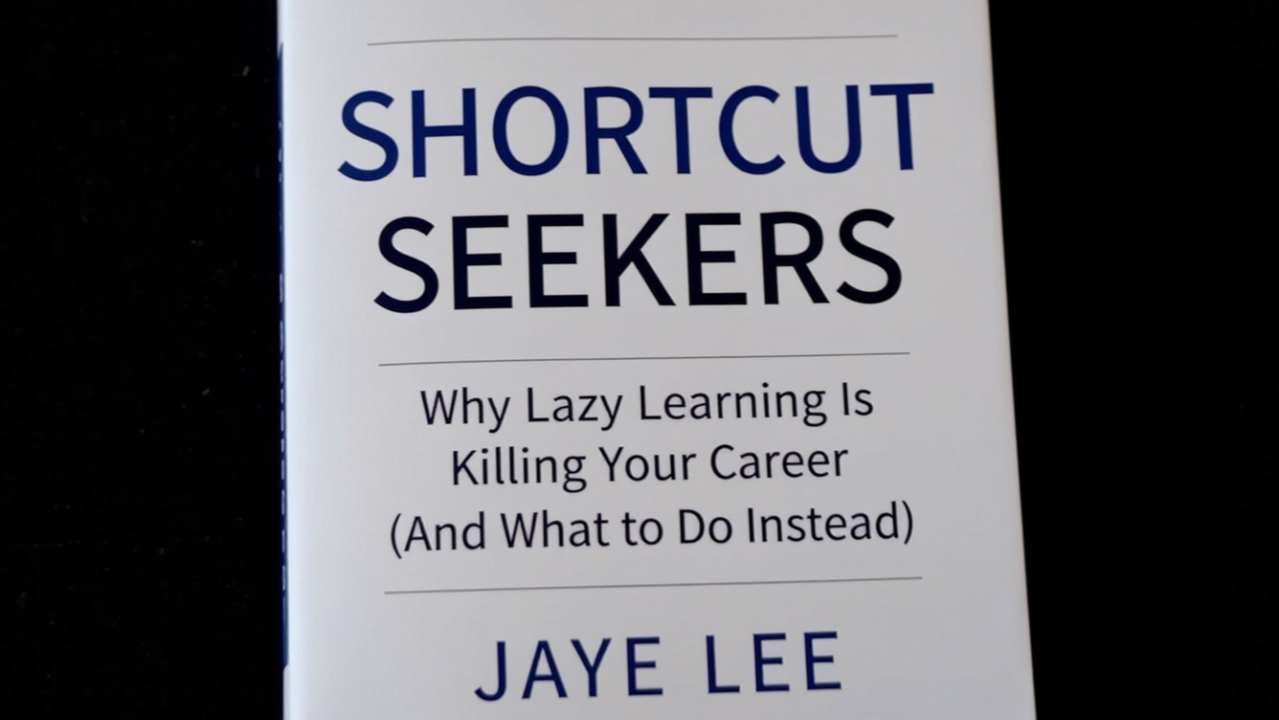
Shortcut Seekers: Why Lazy Learning Is Killing Your Career (And What To Do Instead)
TL;DR: There’s a growing epidemic in professional and coaching spaces: people who constantly ask instead of investigate.
I call them Shortcut Seekers. While questions are powerful, blind dependence on easy answers is reputation-ruining. In this article, I unpack the mindset of Shortcut Seekers, how it reflects deeper patterns of avoidance, and how shifting to deep learning can elevate your career, leadership, and legacy.
Ever met someone who asks 100 questions and still doesn’t know anything?
You explain. They nod. You share resources. They skim. You see them post the same question in another group the next day.
That’s a Shortcut Seeker.
And if you’re a manager, team leader, or coach, they’re the person who slowly unglues your trust. If you’re the Shortcut Seeker, this article might sting a little. But better a sting now than a stalled career later.
What Is a Shortcut Seeker?
Shortcut Seekers are the Ctrl+C, Ctrl+V crew. They want answers now, effort never…. They’re addicted to asking because it feels productive. But unlike strategic questioning, theirs is performative, often bypassing any prior attempt to learn.
They don’t Google. They don’t reflect. They jump straight to your inbox.
Shortcut Seekers aren’t curious learners. They’re anxious validators. And that difference? It matters.
Shortcut Seeking vs Strategic Inquiry

Great questions come after reflection. Shortcut questions come instead of it.
Why This Drives Me (and Others) Nuts
As a coach, I live for questions, the right ones. The powerful ones. The ones that reveal self-awareness, struggle, or courageous pursuit.
But Shortcut Seekers drain the room. They’re not seeking growth. They’re outsourcing it.
I used to get annoyed. Now, I get curious.
Because here’s what I learned: Shortcut Seekers reflect something deeper in me, the parts that also crave the easy way out.
My Reflection: The Coach Who Once Shortcut Herself
I’m not throwing stones from a glass tower. I’ve been a Shortcut Seeker.
I remember the early days of being an employee, frantically trying to piece things together by pinging anyone who seemed smarter. I wanted instant wins. Step-by-steps. Cheat sheets.
What I didn’t realise was that every question I threw out too early was a vote against my capacity to figure it out.
And each time I waited for someone else to make it easier, I delayed becoming the person who could own the complexity.
Now, as a coach, I help others move through that same addiction to outsourcing their insight. Because learning to hold complexity is the difference between someone who leads… and someone who lingers.
The Shortcut Spiral: A Mini Framework
The Shortcut Spiral
Shortcut Seekers aren’t lazy; they’re looped.
The loop is seductive because it feels like momentum. But what it builds is dependence.
Reputational Damage: The Career Consequence Nobody Talks About
Let’s be very blunt here.
Shortcut Seekers erode trust.
At first, it looks like curiosity. But over time, it becomes a pattern. Team leads start to whisper, “They always ask but never deliver.”
If you’re an employee, this kills your promotability. If you’re a coach or consultant, it kills your credibility. People can sense when your expertise is skin-deep.
The world doesn’t reward loud questioners. It rewards strategic thinkers who integrate and apply.
What I Now Teach My Clients (and Practice Daily)
Here’s how I rewired my habit and how I help clients do the same:
1. The 30-Minute Rule
Before asking, spend 30 minutes trying to solve it yourself.
Research. Draft. Think. If you’re still stuck, ask with context.
2. Ask Smarter
Don’t ask, “How do I do this?” Ask, “I explored A, B, and C, and here’s where I’m stuck. Can you help me see what I’m missing?”
3. Honour Your Own Brain
Shortcut Seekers secretly believe they’re not capable. Strategic learners build proof that they are. Every time you struggle through something, you cast a vote for your future self.
Are You a Shortcut Seeker? Self-Audit Time.
Answer honestly:
- Do you frequently ask before researching?
- Do you copy others’ answers without understanding?
- Do you rely on gurus or templates instead of trying your version first?
- Do you get irritated when people ask you to find out for yourself?
If you said yes to more than two, you might be a Shortcut Seeker in disguise.
This Isn’t Just About Learning. It’s About Power.
Shortcut Seekers stay small. They wait for someone else to decode the game.
But strategic learners? They become the game-makers.
Every time you resist the urge to shortcut, you reclaim your power. You become the one people trust, not just for your answers, but for your ability to think.
You don’t build a stellar reputation by asking easy questions. You build it by showing up as someone who’s done the work.
Shortcut Seekers may move fast.
But deep learners? They go far.
If you’re done chasing hacks and ready to master your mind, your craft, and your leadership: stop outsourcing. Start integrating.
This isn’t just a professional upgrade.
It’s a personal revolution.
Reflection Prompt for Newsletter Readers: Have you ever shortcut your way into a dead-end? What did it cost you?
P.S. If you’re a coach or leader who wants to break the shortcut habit and build real mastery, let’s talk. I coach people who are tired of knowing just enough and are ready to lead with deep knowing.
#learningmindset #leadershipdevelopment #professionalgrowth #coachingjourney #deepwork #criticalthinking #reputationmanagement #careerstrategy #thoughtleadership